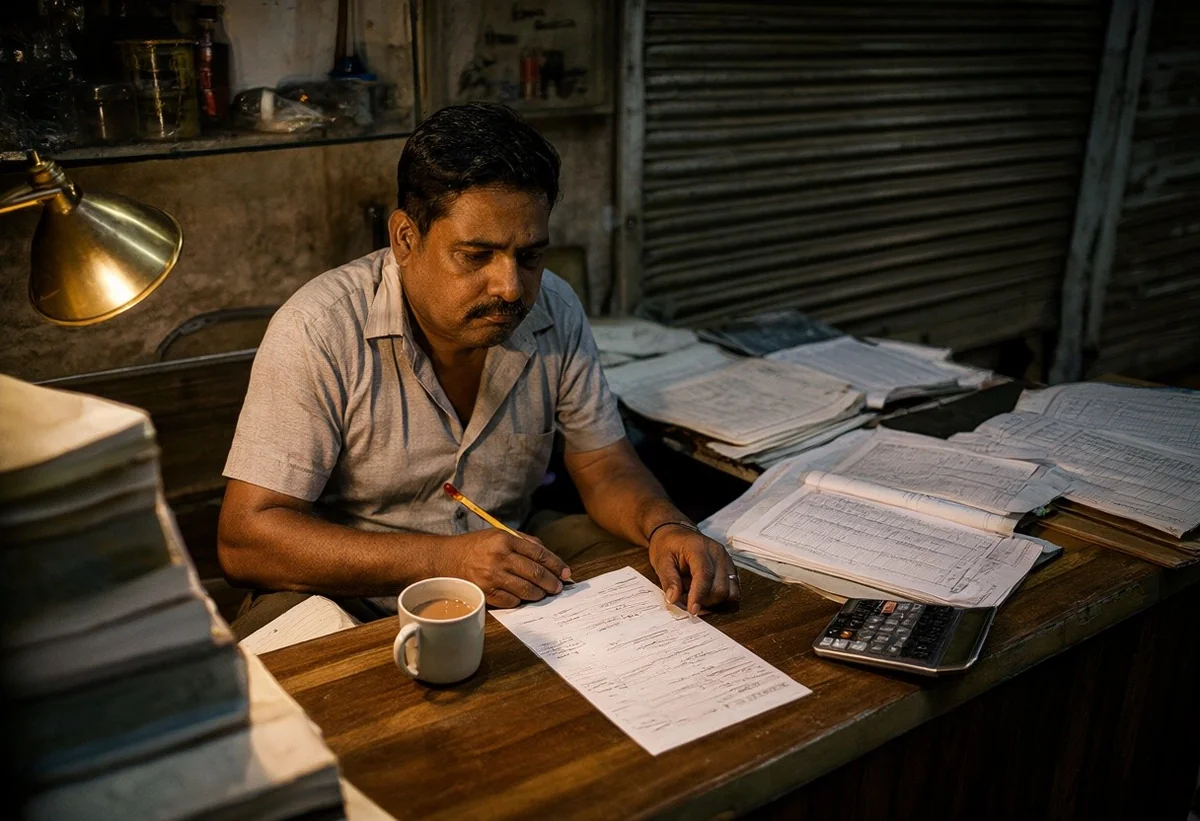
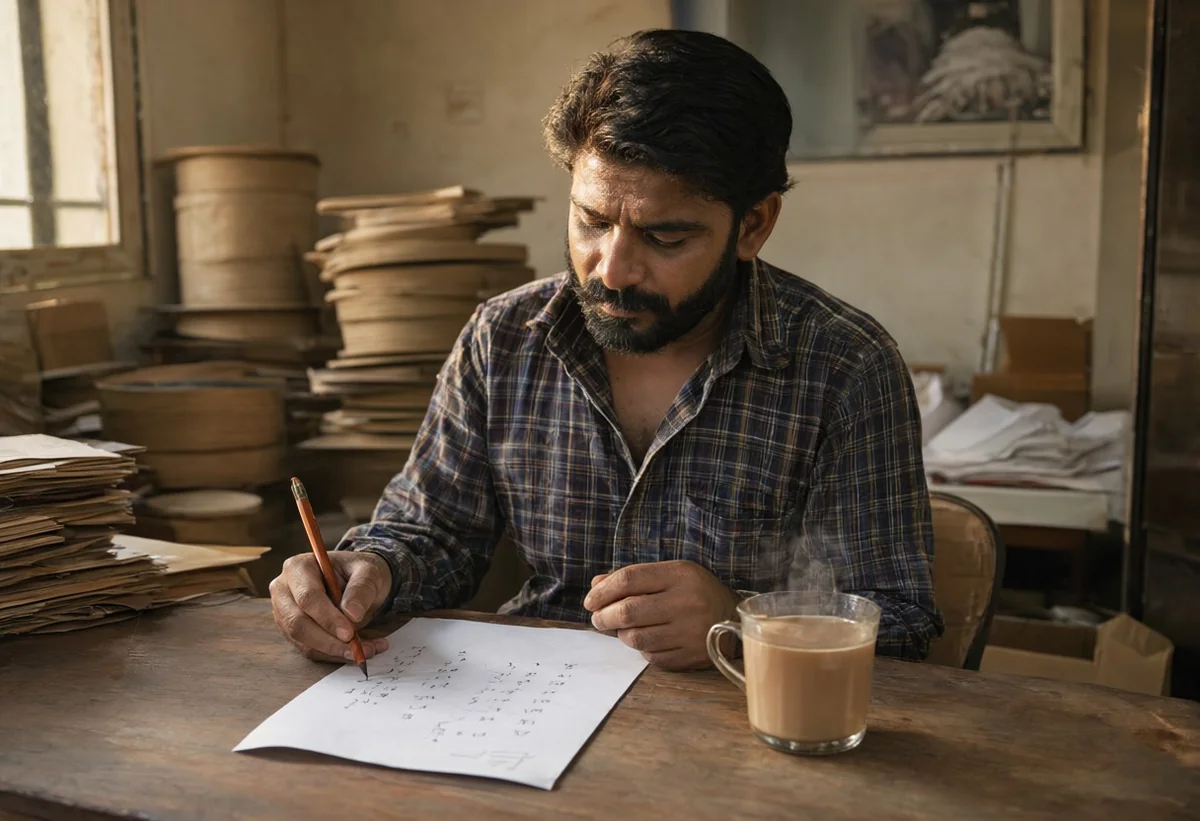
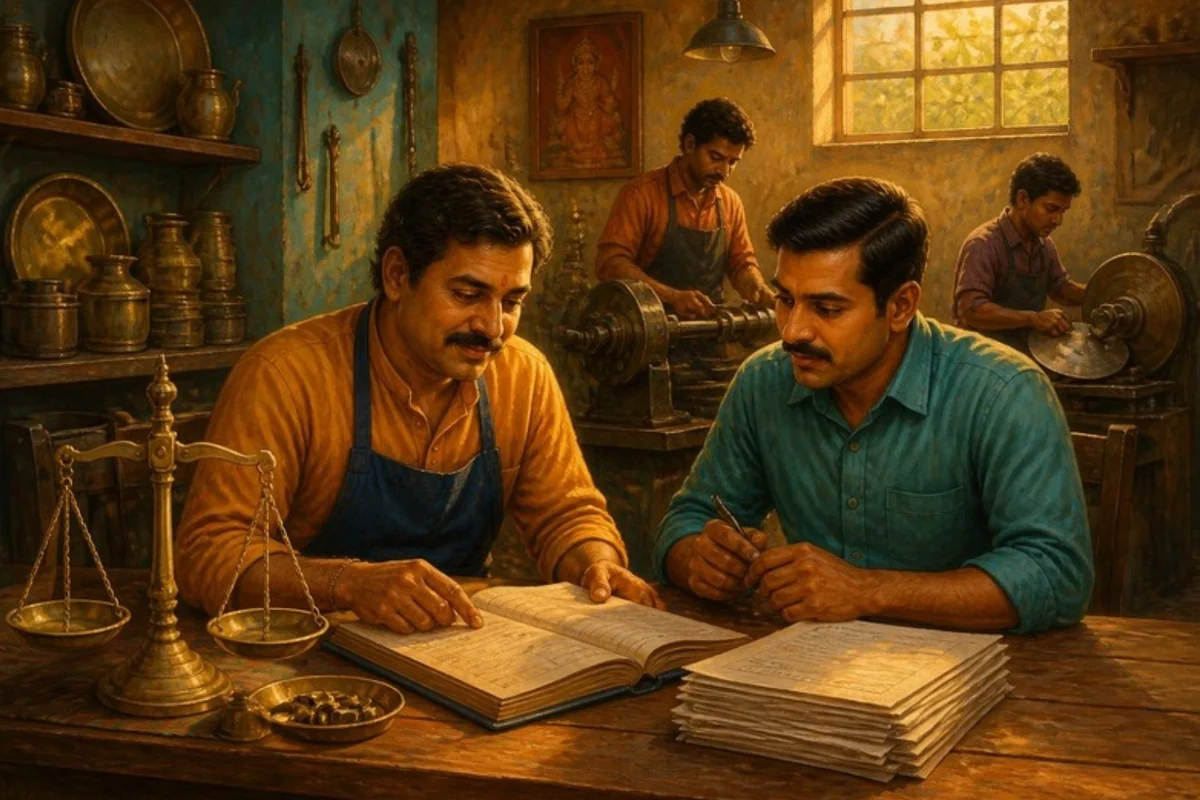
In many trading families across India, Deepavali has a quiet business ritual folded inside the festival. On the evening of Lakshmi Puja, a new set of account books is opened. The first page is marked with a swastika and the words Shubh Labh, a pen and a ledger are placed before the deity, and only then is the first entry written. The custom is called Chopda Pujan, and it has been practised in shops and warehouses for generations. If you run a small business, it is worth looking at again this year, not as a piece of nostalgia but as a working idea: once a year, you stop, close the old book honestly, and open the new one clean.
What follows is not a religious instruction. It is a practical routine that borrows the shape of the old ritual, because the shape is sound. A ceremony forces a pause, a pause creates attention, and attention is the thing most small businesses are short of in the days around a festival, when orders pile up, staff go on leave and the owner is simultaneously a seller, a cashier, a host and a host's guest. If you can spend a few unhurried hours with your books this week, they will repay you through the whole year.
What the old ritual actually does
Look closely at what the ritual contains. A new book is opened, which means the old one has been closed. A first entry is made deliberately, which means someone has decided what the opening position is. A prayer is offered for honest profit, which the old phrase Shubh Labh literally says: good, and gain. The two words sit side by side on purpose. Gain that is not good does not last, and goodness that never produces gain cannot pay the wages.
Strip away the lamps and the sweets and you are left with three disciplines: close the past, state the present, and commit to a standard for the future. Almost every financial problem I see in small firms is a failure of one of these three. The past is never properly closed, so old balances drift forward unexamined. The present is never stated, so nobody can say with confidence what the business owns and owes today. And there is no standard, so each month's results are judged by mood.
Step one: close the old book
Closing means reconciling. Take the bank statement and the cash book side by side and match every entry until the difference is explained or written down as unexplained. Do not hurry past the small mismatches. A forgotten debit of a few hundred rupees is rarely the real problem; it is a signal that some habit, such as writing cash payments from memory at the end of the day, has been leaking for months.
Then list every customer who owes you money and every supplier you owe, with the age of each balance. Put the oldest balances at the top. A receivable that is a year old is no longer a receivable in the ordinary sense; it is a decision waiting to be made. Either you will collect it, with a call this week, or you will write it down, with a clear conscience and a note of what you learned about that customer. Carrying it forward as though it were healthy is the quiet way a book becomes untrue.
Finally, walk the shelves. If you hold stock, count it with your own eyes and compare it to the book figure. The count is tedious and it is always instructive. Items that have not moved in a long time deserve a conversation: a discount, a bundle, a return to the supplier, or an honest write-off. Dead stock holds cash hostage, and Deepavali, when customers are in a buying mood, is the best week of the year to turn some of it back into money.

Step two: state the opening position
Before you open the new year's book, write one page that says where you stand. It need not be sophisticated. It should contain the cash in hand and in the bank, the amounts customers owe you, the amounts you owe, the value of stock at cost, any loans with their monthly instalments, and the commitments you already know are coming: rent, wages, taxes and insurance renewals. When these figures sit on one page, you will see your business as one picture for the first time in a while.
This page is the most valuable thing the ritual produces, and it costs nothing but an afternoon. A page like this is what a lender will ask for, what a partner will want to read, and what you will wish you had when a good opportunity or a bad surprise arrives at short notice. Keep one copy with the books and one copy somewhere separate, because a record that can be lost in the same fire as the shop is not much of a record.
Step three: set a standard you can check
The ritual ends with a wish for honest gain. Turn that wish into something you can check at the end of each month. Choose three or four numbers that matter to your kind of business and write them at the front of the new book: for example, the number of days it takes customers to pay you, the share of your sales that comes from repeat buyers, the cash you keep as a buffer measured in weeks of expenses, and the gross margin on your best-selling item. The right numbers differ from trade to trade, but the principle does not. A target written down in the first week of the year is a promise; a target carried in the head is a mood.
Resist the urge to choose ten measures. A small business cannot watch ten dials. Watch the few that, if they turned bad, would hurt first, and review them on a fixed day each month. A fixed day matters more than a perfect measure, because the habit of looking is what protects you.
The people part of the ritual
In a family business, Chopda Pujan is also a moment when the family and the staff stand together at the shop. That detail matters. Whoever keeps your books, whether it is you, a relative, an accountant or a trusted employee, should be invited into this conversation. Thank them for the year. Ask what made their work harder, and listen. The person who writes the entries usually knows exactly where the process is fragile: the supplier who never sends a proper bill, the customer who pays in three instalments and disputes the second, the form that always arrives late. Ask, fix one of those problems before the year turns, and you have done something that no software purchase can match.
If you employ people, take one more step: say aloud what honest practice means in your shop. If staff know that a small error reported early is welcome and a small error hidden is not, your books will be cleaner for the rest of the year. Rituals work on people precisely because they give a leader a natural moment to say these things without awkwardness.
Where technology can help, and where it cannot
Most small firms now keep at least part of their records in a spreadsheet or accounting application, and that is a good thing. Software is excellent at remembering and adding. It is poor at asking whether an entry is true. A figure typed wrongly is added faithfully, a customer who will never pay is displayed as a customer, and a stock count that was never done is shown as a stock count. The ritual supplies what software cannot: a human being, looking at the real shop, deciding what is true.
So use your tools, but keep one hour in the year when you check them against reality. Print the closing figures, sign them, and put the sheet in the file for the year. A signed page is a small thing, but it turns a pile of entries into a statement you stand behind.
A short checklist for this week
Here is the routine in the order I would follow it if I were sitting beside you. Reconcile the bank and cash books and explain every difference. List receivables and payables by age, and make the collection calls for the oldest balances. Count the stock and mark the slow movers for a Deepavali offer. Write the one-page opening position. Choose your three or four numbers and write them at the front of the new book. Thank the people who keep your records and ask them one question about what makes their work harder. Then, if it is part of your family's practice, perform the pujan with a clear mind, because the honest work has already been done.
None of this requires a consultant, a new system or a large budget. It requires a quiet room, a few hours, and the willingness to look at your own figures without flinching. The festival gives you permission to take that time. Lakshmi, in the old stories, does not enter a house that is unwatched, and a ledger that nobody has looked at in months is a house that is unwatched.
One question to take away
If you could open only one honest number in your new account book this year, which would you choose, and what has stopped you from writing it down until now? Share one line in the comments if you wish; I read every one.
For readers who like a festival with a story attached: my novel Secret of Kakanmath Temple, Patal Loka Book 3, is published on Deepavali, 8 November, on Amazon Kindle. It is fiction, built on an old Indian idea about what a night can hold, and the details are on the Patal Loka series page. I wish you a bright, orderly and profitable year ahead.
📬 Join 49,000+ Indian Professionals
The Inner Circle newsletter delivers curated MSME intelligence, leadership wisdom, and strategic insights every week — completely free. Plus receive the 20 Gita Lessons PDF as a welcome gift.
Subscribe Free →Ready to Go Further?
If you are navigating MSME policy, credit access, or business growth, I offer focused strategy consultations. Let us work through your specific challenge together.
Book a Free Strategy CallPublished 7 November 2026 · dibyenduchoudhury.com