A great monkey-king lies on the ground at the foot of a sal tree, an arrow lodged in his chest, and the man who shot him steps out of the leaves. This is the scene in the Kishkindha Kanda where the Ramayana, in my reading, comes closest to putting its own hero on trial. Vali, ruler of Kishkindha, is not yet dead. He has breath enough to ask a question, and the question is addressed to Rama, the one figure in the epic whom everyone else treats as the measure of dharma.
I treat this episode as a case study rather than a miracle, because it contains a problem that every person with authority eventually meets: what do you owe someone you must stop, when the method that works is the method they cannot see coming?
The fight Tara tried to prevent
Most retellings begin at the duel. The more revealing place to begin is the chapter before it. Sugriva, driven out of Kishkindha and stripped of his wife, has returned and is shouting a challenge outside the gates. Vali's wife Tara hears of it first. As I read the passage (the numbering of chapters varies a little between editions, but it lies around the fifteenth sarga), Tara does what a good counsellor does: she tells her husband not to go out in anger. Her reason is information. Their son Angada's scouts have reported that Sugriva is no longer alone; he has made an alliance with the two princes of Ayodhya.
Vali waves her away. And here is the detail I think standard retellings flatten: his answer is partly an argument from trust. He says he cannot ignore a challenge, and he says that Rama, known as a knower of dharma and grateful for kindness, will not do a wrong act. He is staking his life on the character of the man who will kill him.
That changes how the arrow reads. Vali is not simply an arrogant brute struck down because the story needs a villain. He is a man who has weighed his opponent's reputation and decided it is a form of protection. Everything that follows is, in part, the epic testing whether that trust was misplaced.
Vali's question, in his own terms
When Vali speaks from the ground, he does not plead. He argues, and his argument has three prongs.
- I was fighting someone else, and you struck me from concealment. Where is the honour in that?
- I had done you no injury. I was no enemy of your house, and I was not within your kingdom.
- If you had wanted Sita found, you had only to ask me. He claims he could have brought Ravana back in bonds.
Notice the tone. It is the speech of a proud, wounded, intelligent man, and the poet gives it full force. A tradition that wanted a tidy hero would have cut it short. Valmiki lets the accusation stand in the open air before Rama answers.
Rama's reply: a jurisdiction, not a duel
Rama's answer, as I follow it, does something subtler than defending the ambush. He changes the question. First he states a claim of authority: the earth, with its mountains and forests, belongs to the Ikshvaku line, and Bharata, who rules in Ayodhya while Rama is in exile, has charge of punishing wrongdoers. Rama presents himself as an agent of that authority, not a private warrior. Second, he names Vali's offence: Vali took Sugriva's wife while his brother lived, and a younger brother's wife is, in the moral language of the text, to be treated like a daughter-in-law. Third, he answers the charge about concealment with an analogy to hunting: kings shoot deer from cover, and a monkey is a forest creature, so the rules of a chivalrous duel do not apply. Finally he points to his vow to Sugriva, made before the sacred fire.
What I notice, reading carefully, is what Rama does not say. He does not claim the shot was a fair fight. He does not pretend the tree was not there. His case is that fairness was owed in a duel between equals, and this was not a duel; it was the carrying out of a sentence by someone with the standing to pass it. In Valmiki's telling, Vali concedes. He does not stop grieving, but he accepts that the argument has an answer.
What the standard retelling misses
Three things get lost when the episode is compressed into "Rama kills the wicked Vali."
First, the epic does not cleanly resolve it. The reply is forceful, yet it answers a different question from the one asked. Vali asked about method; Rama answered about authority and guilt. The gap between them is either deliberate or at least tolerated by the poet, and readers across centuries have kept returning to it for that reason. I take the gap as a form of candour: the text records an act that is defensible and still costly.
Second, Vali dies better than he lived. In his final moments, as the poem has it, he gives Sugriva the golden necklace associated with Indra, asks his younger brother's forgiveness, tells him to trust Tara's judgement, and commends Angada to his care. A man who has just been struck down from hiding ends by arranging a peaceful succession. A reader who had taken the ambush as simple justice finds that the ending will not let that comfort settle.
Third, Rama carries the consequences. He does not enter Kishkindha himself, since his exile bars him from city life; instead Sugriva is crowned, and Angada is installed as heir. Tara, who had warned correctly, is left a widow in a court she once helped to run. The epic does not dwell on her, and I think the silence is part of the cost. A careful reader notices who is left to absorb the consequences of a just act, and that the poem lets us notice it.
The dharma question, stated plainly
Strip the setting away and the problem is this. May you use concealed means against someone who is guilty of a real wrong, when open means would fail or when you are bound by a prior promise? And if you may, what do you still owe that person?
I think the Ramayana answers in two parts. The first is that authority and guilt matter: Rama is not acting from private grievance, and Vali's offence against Sugriva is real. The second is that the act still leaves a debt, which Rama pays in the only ways available after the arrow has flown. He listens to the accusation, he answers it in full rather than commanding silence, and he secures the future of the family left behind. A modern leader should not borrow the first part without the second.
Where this lands in a modern office
The scene has plain modern cousins. An internal auditor quietly assembles a case before confronting a senior colleague. A regulator carries out an inspection without notice. A board prepares a leadership change without telling the executive concerned. Each can be justified, and sometimes must be. Each also takes from the person on the receiving end the thing Vali demanded: the chance to meet the accuser face to face.
Rama's example suggests three tests that I put to myself, and to students who will someday hold such powers:
- Is my authority real and bounded? Am I acting for an institution that can be asked to justify me, or only for myself?
- Could I state my method, in full, to the person it touches, afterwards? If I would be ashamed to describe it, that is information.
- Who is left standing when the arrow has flown, and what have I arranged for them?
A practical close
The next time you are about to act without warning against someone who deserves consequences, write down Vali's three accusations and answer each in a sentence, as Rama had to. If any answer rests on "because I could", stop. If every answer rests on a duty you can name and a person you will look after, you have done what the epic permits. You will still feel the weight, and the Ramayana, to its credit, never asks you to pretend otherwise.
📬 Join 49,000+ Indian Professionals
The Inner Circle newsletter delivers curated MSME intelligence, leadership wisdom, and strategic insights every week — completely free. Plus receive the 20 Gita Lessons PDF as a welcome gift.
Subscribe Free →Ready to Go Further?
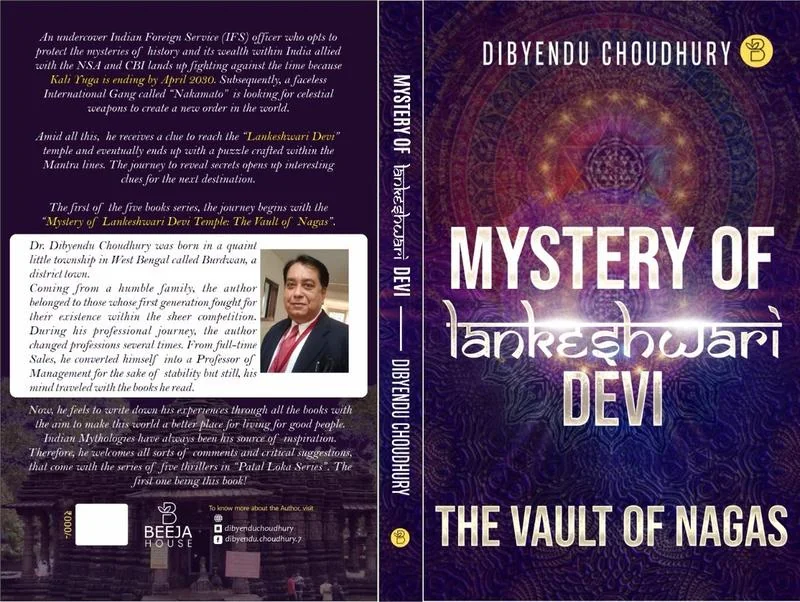
My mythology and fiction titles bring these stories alive for the modern reader. Available on Amazon India.
Explore My Books on AmazonPublished 12 October 2026 · dibyenduchoudhury.com