Published 23 June 2026 by Dibyendu Choudhury — author, MSME policy researcher, and consultant.
The Reserve Bank of India's 2026 collateral-free lending reforms represent one of the most significant policy shifts for small business credit in recent memory. For millions of MSME owners who have long struggled with collateral barriers, understanding exactly what has changed — and how to act on it — is now an urgent priority.
The Policy Shift That Changes Everything

Until recently, accessing formal credit for most MSMEs meant one thing: collateral. Land, equipment, property — the traditional gatekeepers of institutional finance. The RBI's 2026 reforms fundamentally alter this equation by expanding unsecured credit limits and mandating faster processing timelines for small business applications.
The revised guidelines raise the ceiling for collateral-free business loans to ₹25 lakh for eligible borrowers with clean repayment histories — up from the earlier ₹10 lakh threshold under most PSB schemes. More critically, the reforms introduce a 30-day mandatory processing window, ending the prolonged ambiguity that historically plagued MSME credit applications.
Who Qualifies and What Has Actually Changed

Eligibility under the new framework centres on three criteria: Udyam registration, a minimum of two years of operational history, and a satisfactory credit track record as assessed through the Credit Guarantee Fund Trust for Micro and Small Enterprises (CGTMSE). The CGTMSE cover itself has been expanded, now extending to 85% of the loan value for micro enterprises — reducing lender risk and, in theory, making credit more freely available.
The practical changes that matter most to business owners include the removal of third-party guarantees for loans up to the revised ceiling, simplified documentation requirements under the PM Vishwakarma and PMEGP schemes, and the integration of GST return data as a primary credit assessment input — reducing dependence on formal audited accounts that many MSMEs still lack.
Navigating the Application Process in 2026

Understanding the policy is one thing. Successfully accessing the credit is another. Based on the current framework, MSME owners seeking collateral-free loans should begin with three concrete steps.
First, ensure Udyam registration is current and accurately reflects the enterprise's actual NIC code and investment figures. Discrepancies between Udyam data and GST filings remain a leading cause of application delays. Second, pull your credit report from CIBIL or Experian before approaching any lender — errors in business credit files are common and can be corrected before they become rejection reasons. Third, approach banks or NBFCs already designated as CGTMSE member lending institutions, as they have existing frameworks for processing these applications and are contractually obligated to adhere to the 30-day timeline.
The Hidden Barriers That Remain
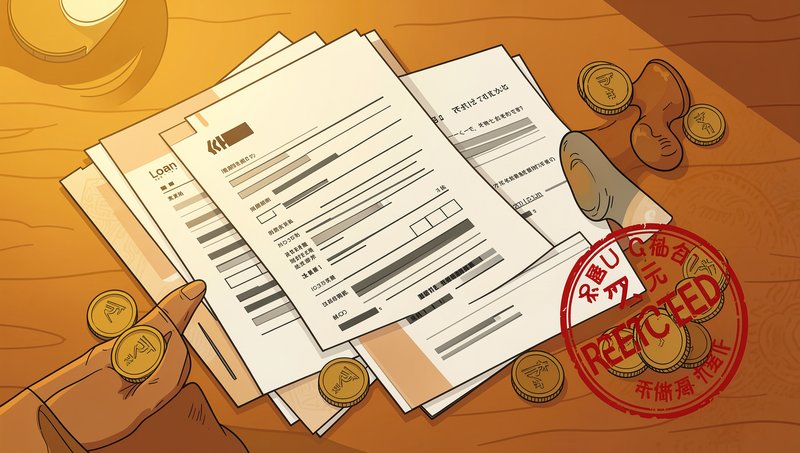
Even with the improved policy architecture, practical barriers persist. Many public sector bank branches continue to apply informal collateral requirements even for loans technically covered under the new framework — a form of regulatory arbitrage that the RBI has acknowledged but not yet resolved. The 30-day processing mandate remains aspirational for branches with high loan volumes and understaffed credit appraisal teams.
Fintech lenders operating under RBI's digital lending guidelines offer a faster — though often more expensive — alternative. For working capital needs under ₹10 lakh, platforms integrated with GST and account aggregator frameworks can disburse within 48 to 72 hours. The trade-off is interest rates that typically run 4 to 6 percentage points above the comparable PSB rate.
What This Means for Your Business Strategy

The 2026 reforms create a genuine opening for MSMEs that have historically been locked out of formal credit. But the opportunity requires deliberate preparation. Maintaining clean GST compliance, building a documented transaction history through formal banking channels, and investing in Udyam registration accuracy are no longer just administrative obligations — they are credit infrastructure.
Businesses that treat their financial documentation as an active strategic asset will find the new framework highly navigable. Those that approach credit only in moments of crisis — with incomplete records and no prior lender relationship — will continue to find even the reformed system difficult to access.
The Broader Context: Credit Access as Competitive Advantage

India's MSME sector accounts for roughly 30% of GDP and over 110 million jobs. The persistent credit gap — estimated at over ₹20 lakh crore by the IFC — is not merely a finance problem. It is a productivity problem. Businesses that cannot access timely, affordable credit cannot invest in technology, cannot manage inventory efficiently, and cannot absorb temporary revenue shocks without damaging their supply chain relationships.
The RBI's 2026 framework, combined with the OCEN (Open Credit Enablement Network) infrastructure coming online across major lending platforms, creates the foundation for a materially different credit environment over the next three to five years. The MSMEs that position themselves correctly now will enter that environment with a significant head start.
Actionable Steps for MSME Owners This Week

The policy is in place. The window is open. Here is what to do immediately: verify your Udyam registration at udyamregistration.gov.in and confirm your NIC code accuracy; download your CIBIL business credit report and dispute any errors; contact your primary banker specifically about CGTMSE-backed collateral-free loans under the revised 2026 ceiling; and if your bank is unresponsive within 30 days, file a formal complaint with the RBI Banking Ombudsman — the processing timeline is now a regulatory obligation, not a courtesy.
The Bhagavad-gita teaches that right action pursued with clarity and without attachment to obstacles is the only sustainable path. In the context of MSME credit access in 2026, that means building the financial foundation steadily — not waiting for the perfect moment, but acting precisely and consistently within the framework that now exists.
Go deeper
Want the full playbook on this? Read The MSME Owner's Finance Playbook 2026 — a companion e-book from the library.