There is a tiredness that sleep does not repair. You wake with the list already running in your head, and before your feet touch the floor you have counted everything that will collapse if you stop. The family depends on you. The office depends on you. The parents, the loan, the people who work under you: you have become the pillar under every roof, and one morning the pillar does not want to get up. People will call that laziness. It is not laziness. It is the exhaustion of a soul who honestly believes that the whole result rests on his own arm. Arjuna was the greatest archer of his age, and he too cast aside his bow and sat down on the chariot (Bhagavad-gītā 1.46). What Kṛṣṇa says to raise him is the subject of this discussion, and it is not what you would expect.
Be an Instrument: The End of Heroic Burnout
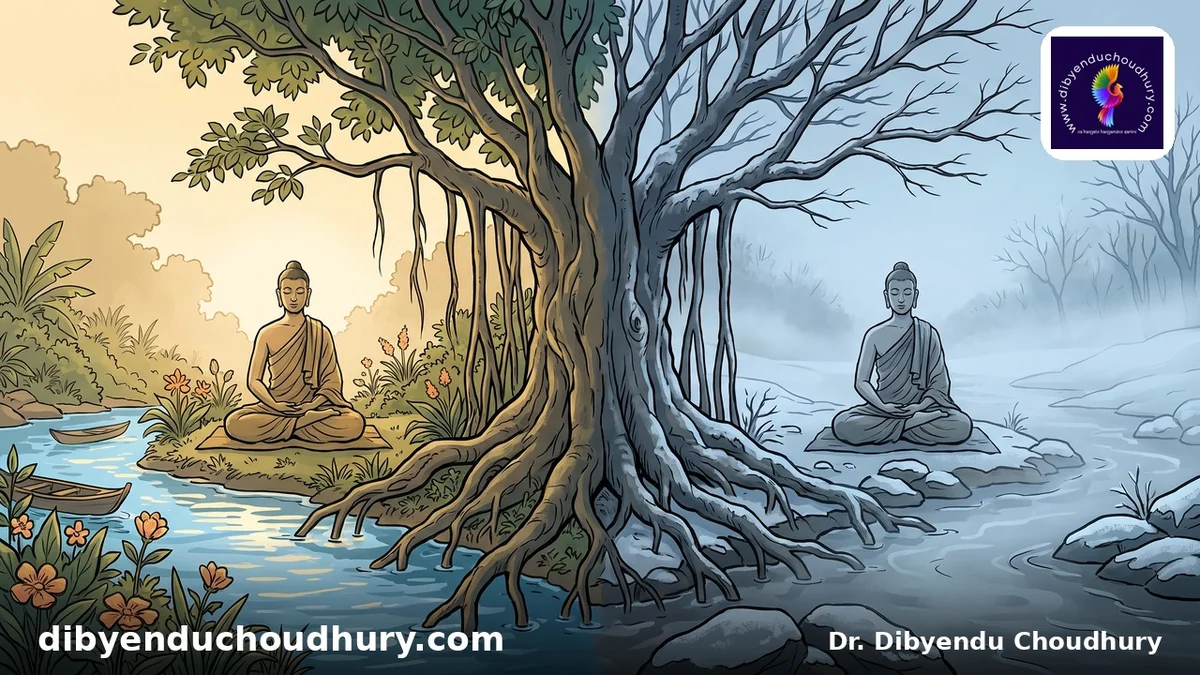
Examine the thought that is crushing you. It is not that you have much to do. Many people have much to do and sleep soundly. The thought is this: if I do not do it, it will not happen, and if it fails, I alone have failed. That is the conviction of being the sole doer, and the Gītā names it exactly. The spirit soul, bewildered by ahaṅkāra, false ego, thinks himself the doer of activities that are in fact carried out by the three modes of material nature (Bhagavad-gītā 3.27). Later Kṛṣṇa counts the causes of any action and finds five: the place of action, the performer, the senses, the different endeavours, and ultimately the Supersoul (Bhagavad-gītā 18.14). You are one of five. Whoever looks upon himself as the only doer, He says, does not see things as they are (Bhagavad-gītā 18.16). So the burden you carry is real as a feeling and false as a fact. You have been lifting four shares that were never assigned to you, and no body and no mind is built for that load. Kṛṣṇa does not answer Arjuna's collapse by praising his strength. In the eleventh chapter, after revealing the viśva-rūpa, the universal form, He gives an order that at first sounds like more pressure and turns out to be the removal of pressure.
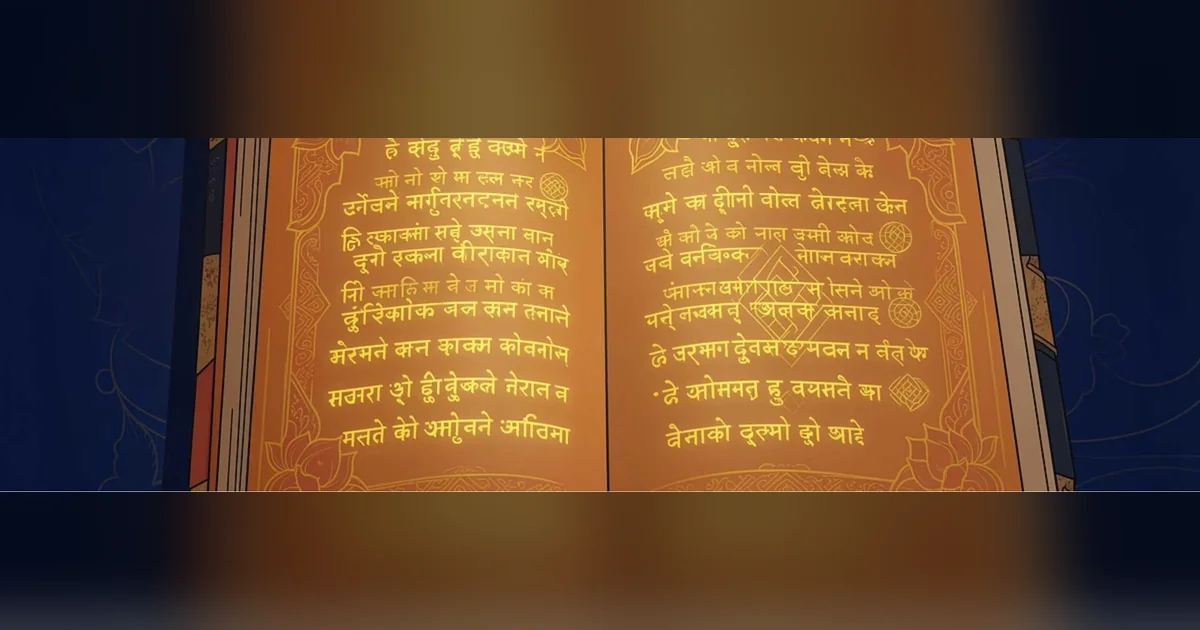
tasmāt tvam uttiṣṭha yaśo labhasva jitvā śatrūn bhuṅkṣva rājyaṁ samṛddham mayaivaite nihatāḥ pūrvam eva nimitta-mātraṁ bhava savya-sācin
— Bhagavad-gītā 11.33
Translation: Therefore get up. Prepare to fight and win glory. Conquer your enemies and enjoy a flourishing kingdom. They are already put to death by My arrangement, and you, O Savyasācī, can be but an instrument in the fight.
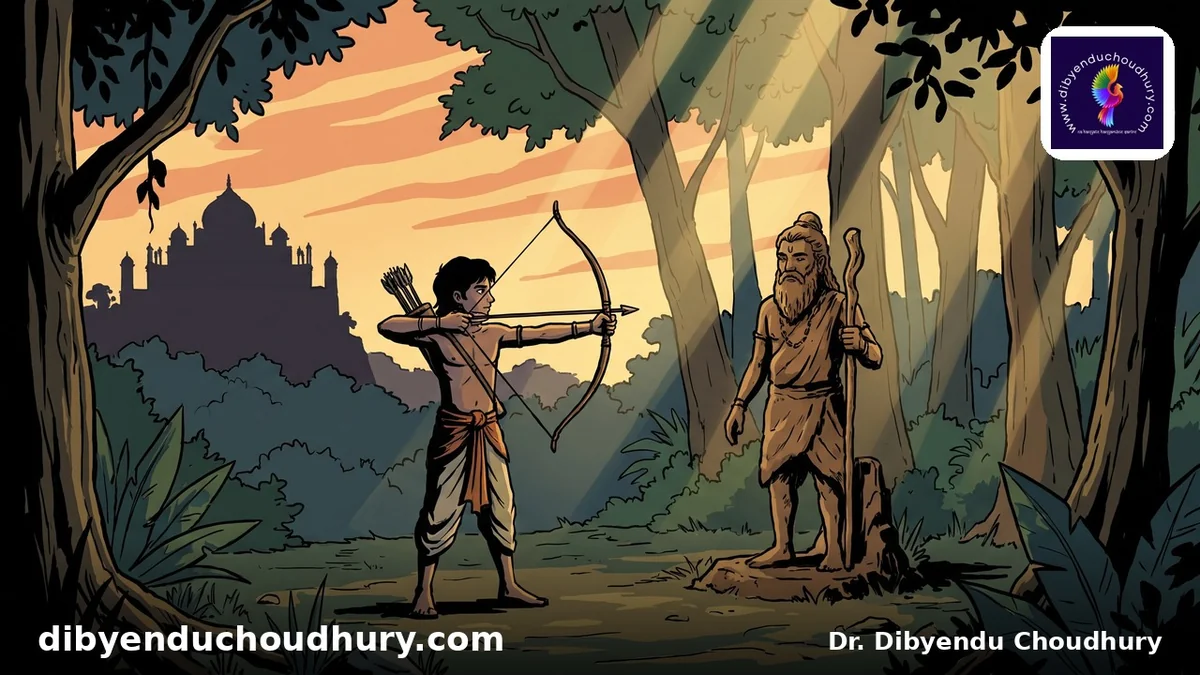
Purport: Look at the order of the words. He says rise, win glory, enjoy the kingdom, and then He gives the reason: mayaivaite nihatāḥ pūrvam eva, by Me alone they have already been put down. The work is finished before Arjuna lifts his bow. Then comes the instruction that matters to every exhausted person: nimitta-mātraṁ bhava, become only the instrument. Notice also how He addresses him. Savya-sācin means the archer who can shoot expertly even with the left hand. Kṛṣṇa does not belittle Arjuna's skill in the same breath in which He takes away his burden. The skill is wanted. The effort is wanted. What is not wanted is the idea that the outcome hangs from your arm. An instrument must be sharp and it must be present. It is not asked to be the cause.
Demotivation Is Often Exhaustion From Carrying the Whole Result
Now apply this to your own case. You were not demotivated on the day you began. You became demotivated after many months of treating every result as a verdict upon yourself. A good month meant you were worthy and a bad month meant you were finished, and the mind cannot live under a daily trial for long. It stops wanting to enter the courtroom. That is what you are calling a loss of motivation. Kṛṣṇa had already given Arjuna the principle in the second chapter: your right is to the performance of duty and not to its fruits, you are never to think yourself the cause of the results, and you are not to become attached to inaction either (Bhagavad-gītā 2.47). Read that last clause carefully, because the tired mind will try to bargain. It says: if the result is not mine, then let me do nothing. Kṛṣṇa closes that door in the same verse. He does not relieve you of the work. He relieves you of the ownership. And understand that there is nothing unspiritual about ordinary rest. He says plainly that yoga is not for one who sleeps too much or does not sleep enough, and that the person regulated in eating, sleeping, recreation and work can mitigate all material pains (Bhagavad-gītā 6.16-17). If your body has been driven without sleep for years, sleep. If the heaviness has gone on for weeks and has begun to frighten you, speak to a doctor today. An instrument is to be kept in good order.
“You were never asked to be the cause. You were asked to be present, skilled and willing in the hand of the one who is the cause, and that is a far lighter thing to be.”
Nimitta-mātraṁ Bhava Savya-sācin
What does it mean, practically, to be nimitta, an instrument? Think of a pen in the hand of a writer. The pen must have ink and a good point, and it must be on the desk when the writer reaches for it. It does not lie awake wondering how the book will be received. In the same way your part is to arrive, prepared, and to do the piece of work in front of you as an offering, and then to stop. Kṛṣṇa describes the person who has understood this: though seeing, hearing, moving about and working, he knows within himself that he does nothing at all, for it is only the senses that are engaged with their objects (Bhagavad-gītā 5.8-9). He promises that one who works in consciousness of Him will pass over every obstacle by His grace, and He warns in the same verse that one who acts through false ego, not hearing Him, will be lost (Bhagavad-gītā 18.58). So the practice is simple to state. Before the day's work, say to Him in your own words: this is Yours, use me. After the day's work, say: the result also is Yours. But you may fairly ask on what ground Kṛṣṇa can tell a soldier that a battle not yet fought is already decided. He does not ask Arjuna to accept it blindly. One verse earlier He had told him who was speaking.
kālo ’smi loka-kṣaya-kṛt pravṛddho lokān samāhartum iha pravṛttaḥ ṛte ’pi tvāṁ na bhaviṣyanti sarve ye ’vasthitāḥ praty-anīkeṣu yodhāḥ
— Bhagavad-gītā 11.32
Translation: Time I am, the great destroyer of the worlds, and I have come here to destroy all people. With the exception of you , all the soldiers here on both sides will be slain.
Purport: Kālo ’smi: I am time. Arjuna had asked the fearful form before him who He was and what His mission was (Bhagavad-gītā 11.31), and this is the answer. Time has come to act, and ṛte ’pi tvām, even without you, the warriors arrayed on both sides will not remain. Hear that phrase without fear. Even without you. To the proud man it is an insult. To the exhausted man it is a release. The world is not balanced upon your shoulders. It was moving before you took this body and it will move after you leave it, under the direction of the same Lord. Then why does He ask Arjuna to fight at all? Because He wishes to give the credit to His devotee. The plan does not need Arjuna. Kṛṣṇa wants Arjuna in it. That is a very different reason for getting up in the morning from the one you have been using.
Time Has Already Acted: The Universal Form Shows the Finished Work
Consider what Arjuna actually saw. Within the universal form he saw the sons of Dhṛtarāṣṭra with their allied kings, and Bhīṣma, Droṇa and Karṇa also, rushing into those fearful mouths as moths rush into a blazing fire (Bhagavad-gītā 11.26-29). He was shown the end of the war before its first arrow. And Kṛṣṇa at once names the very opponents Arjuna dreaded most, telling him that Droṇa, Bhīṣma, Jayadratha, Karṇa and the other great fighters have already been destroyed by Him, and that Arjuna should therefore fight without being disturbed (Bhagavad-gītā 11.34). Do not be disturbed: that is the instruction for you also. I am not telling you that your particular undertaking is guaranteed to succeed in the shape you have imagined. The Gītā gives no such promise, and a result arranged by Kṛṣṇa may look, for a season, like a loss. This is difficult to accept, and it is still the teaching. What is promised is something better. To those who worship Him with exclusive devotion He says that He personally carries what they lack and preserves what they have (Bhagavad-gītā 9.22). The carrying is His. And see how the whole conversation ends. Arjuna does not say that he now feels inspired. He says that his illusion is gone, that by Kṛṣṇa's mercy his memory has returned, and that he stands firm, free from doubt, ready to act on His word (Bhagavad-gītā 18.73). His strength came back when his position was corrected. It was never a question of enthusiasm. It was a question of who he thought he was.
So get up. Not because everything depends on you, but because it does not. Tasmāt tvam uttiṣṭha, therefore arise: the order to stand comes after the news that the Lord has already acted, and it is spoken to a friend. Tomorrow morning, before the list begins to run in your head, sit for a few minutes and place the day in His hands. Chant Hare Kṛṣṇa Hare Kṛṣṇa, Kṛṣṇa Kṛṣṇa, Hare Hare, Hare Rāma Hare Rāma, Rāma Rāma, Hare Hare. Then take up the first piece of work in front of you as carefully as Arjuna drew his bow, and leave the result where it has always been. You will find that the same duties weigh less. Nothing outside has changed. You have only stopped being the pillar and become what you were all along: an instrument in a hand that does not tire, does not miscalculate, and does not let go of those who depend on Him.
From the Book
This article draws on the Demotivated chapter of Bhagavad Gita for Everyday Life, my forthcoming book applying Kṛṣṇa’s instruction to the specific afflictions of ordinary life. The chapter treats every verse the Gītā assigns to demotivated, verse by verse, with the word-by-word meaning and its application to work and family.
Go deeper now: Karma-Yoga at Work.