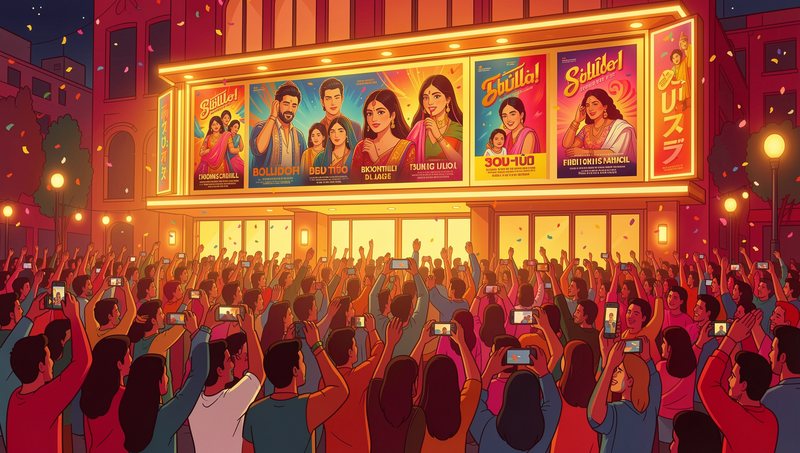
When a film's first look causes a near-stampede, you know India isn't just watching a movie. It is answering a calling. Thousands of devotees, fans, and ordinary citizens packed the streets outside a Jaipur multiplex in early 2026 when the first official glimpse of Ranbir Kapoor's Ramayana was projected on a giant screen. Police barricades buckled. People wept. Someone had fainted in the front rows. And across social media, the clip went viral within minutes — not because it was unusual, but because it was expected. This is what the Ramayana does to India.
The Scene That Changes Everything
The scene outside that multiplex was not a crowd. It was a congregation. India has always treated its epics not as entertainment but as living scripture — and when those epics reach the screen with the scale and seriousness they deserve, the response is more pilgrimage than premiere. The Ramayana, in particular, occupies a place in Indian consciousness that no other story does. It is in every household's prayers, every grandmother's bedtime story, every painting on a roadside temple wall. To bring it alive in cinema — faithfully, powerfully — is to touch something that millions carry as sacred memory.
The stampede, the tears, the crowds who stayed until midnight just to catch a glimpse: none of this is irrational. It is the natural response of a civilization that recognises its own soul on screen.
Why the Ramayana Moves India Like No Other Story
The Ramayana is not a story about the past. It is a manual for how to live in the present. Its author, the sage Valmiki, gave India its first great poem — the Adi Kavya — approximately 2,500 years ago. But the story it tells is far older, carrying within it the accumulated moral wisdom of a civilization that had already been thinking about dharma, loyalty, sacrifice, and love for millennia before it was written down.
Ram, the eldest prince of Ayodhya, is not a tragic hero in the Western sense. He is not broken by his circumstances. He chooses exile with as much grace as he would choose the throne. When Sita is abducted, his grief is real but his resolve is complete. He does not rage at the universe. He acts — methodically, ethically, with every relationship properly maintained even under the most extreme pressure. That is the ideal the Ramayana sets before India: not perfection, but righteous conduct in imperfect circumstances.
Ram's Eternal Dharma — What the Epic Actually Teaches
At the heart of the Ramayana is a concept that has no perfect English translation: dharma. It is duty. It is righteousness. It is the invisible thread that connects each person to their proper role in the world — as a son, a husband, a king, a friend. Ram embodies dharma not by accident of birth but by constant, deliberate choice. When told he must spend fourteen years in exile to honour his father's word, Ram does not argue. He does not negotiate. He goes.
This is not the passivity of someone who has given up. It is the active decision of someone who understands that keeping the social and moral fabric intact is worth more than personal advancement. And this is the lesson that India returns to the Ramayana for, generation after generation: that how you conduct yourself under pressure is who you truly are.
Sita, too, is often misread as a passive victim. The Ramayana tells a different story. She is fiercely loyal, deeply wise, and — when the moment demands — capable of challenging even Ram himself. Hanuman's devotion, Lakshman's fraternal love, the strategic friendship of Sugriva, the moral crossroads of Vibhishana who chose righteousness over family loyalty — the Ramayana is a map of every kind of human relationship and the tests it faces.
Ranbir Kapoor and the Weight of Playing Ram
No casting decision in recent Indian film history has generated more debate. When Ranbir Kapoor was announced as Ram, the reaction was immediate and divided. His previous roles — brooding romantic leads, complex antiheroes — seemed distant from the serenity and dignity that Ram demands. Critics wrote think-pieces. Fan communities split. Social media ran hot for weeks.
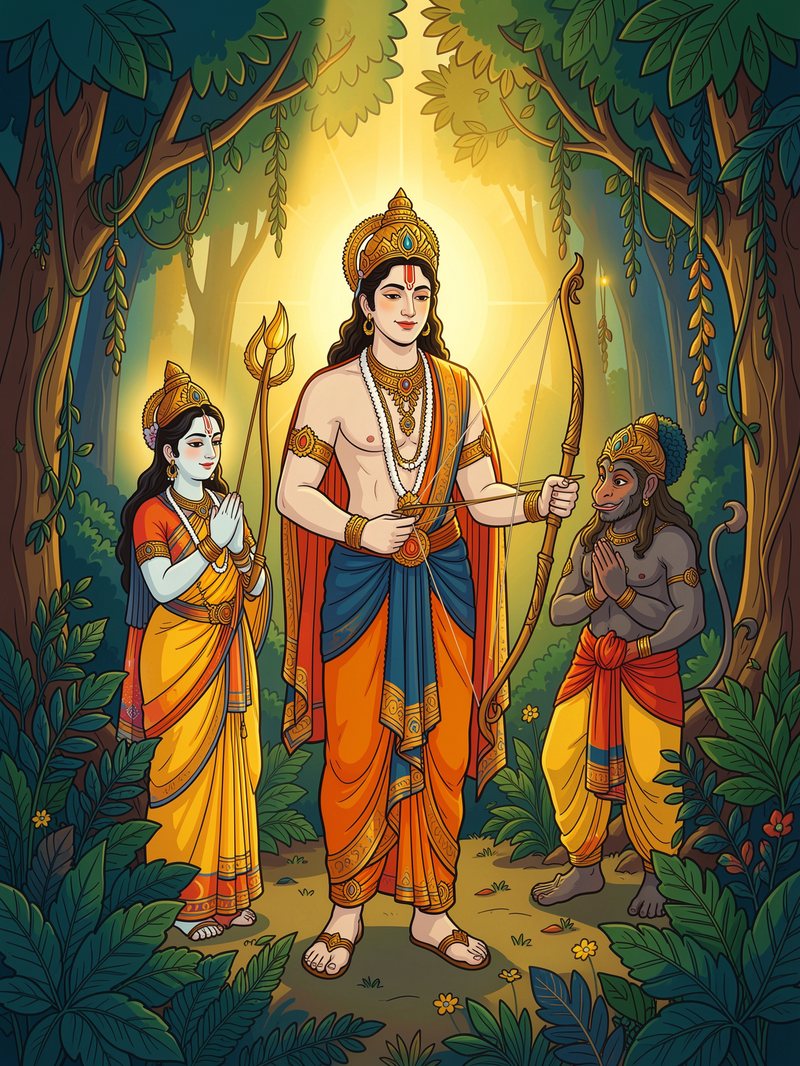
But those who understand cinema know that great casting is often counterintuitive. The actor who surprises you is often the one who transforms in front of you. What the first-look images showed — and what sent those Jaipur crowds into fervour — was a Ranbir Kapoor almost unrecognizable in stature. The bow. The posture. The stillness in the eyes. Whether he fully inhabits Ram will only be seen on screen, but the first look suggested a man who had prepared seriously for the role and understood what was at stake.
Nitesh Tiwari's Vision — A Two-Part Epic for the Ages
The man behind the camera is perhaps even more significant than the man in front of it. Nitesh Tiwari directed Dangal — one of the highest-grossing Indian films ever made and a picture that combined sports drama with something deeper: a story about what a father believes his daughters are capable of. That film's emotional intelligence, its patience, its refusal to simplify complex characters — all of these are exactly the qualities the Ramayana demands.
With a reported budget exceeding ₹835 crore and a plan to release in two parts, this is clearly India's most ambitious mythological film project. The scale is unprecedented. But scale without soul produces spectacle, not story. What gives this project its genuine promise is Tiwari's track record of building films around human truth rather than visual effects. The first look confirmed this instinct: the emphasis was on Ram's face, not on battle sequences.
Why This Film Could Cross Every Border
India's mythology has never been properly introduced to the world. Despite the global success of Indian cinema, the deep spiritual and philosophical richness of India's epics has rarely been represented on screen with the budget and craft it deserves. The Ramayana is not a local story — it is one of the foundational stories of Asian civilization, recognized and revered in forms across Southeast Asia, from Thailand's Ramakien to Indonesia's Kakawin Ramayana.
A well-made cinematic Ramayana, distributed globally, has the potential to do what no film has done before: introduce the world not to a Bollywood masala entertainer, but to the depth of India's philosophical and spiritual heritage through the most accessible medium of our time. That is the real significance of the stampede in Jaipur. It was not hysteria. It was a civilization recognizing that something long-overdue was finally arriving.
The Lesson India Carries From Ramayana Into Every Century
Every generation receives the Ramayana differently but takes the same thing from it: that moral integrity is not a strategy, it is an identity. Ram's fourteen years in the forest were not a setback — they were a refinement. The trials of the exile strengthened every alliance, tested every relationship, and prepared him for the governance that followed. In the Ramayana, suffering has purpose. Patience is not weakness. Righteousness, even when costly, produces the only outcomes worth having.
As India watches Ranbir Kapoor step into the golden light of this production, what the crowds are really waiting for is confirmation that the values the Ramayana has always held up — loyalty, duty, love, courage, and the quiet dignity of doing what is right even when no one is watching — will be honoured on screen. That is a very specific kind of faith. And it is a faith that India has carried across 2,500 years without being asked to justify it.
DEEPEN YOUR UNDERSTANDING
Read the Bhagavad Gita Applied to Leadership
The Gita and Ramayana together form the bedrock of Indian philosophy. Explore how Krishna's teachings in the Gita connect to Ram's living example in the epic — and what both mean for your own life and work.
Explore All Blog Posts