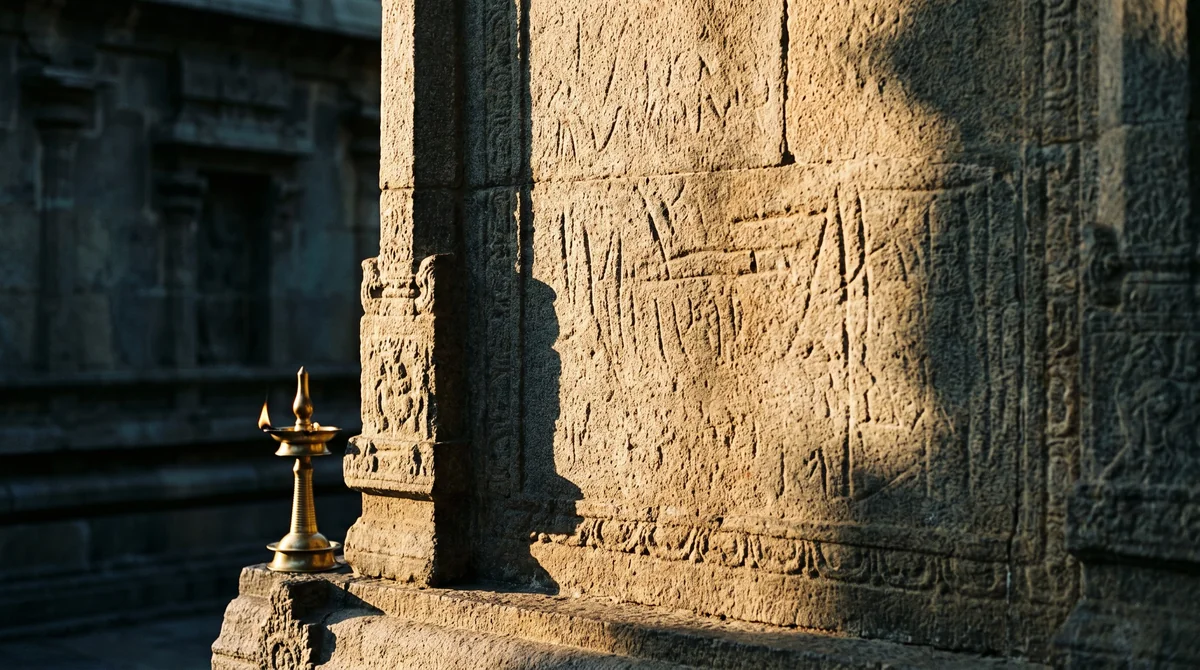
You are in an extraordinarily rare situation. Not because of your achievements, your nationality, or your circumstances. Because you have a human body. The Vedic śāstras are unambiguous on this point: the human form of life is the rarest in all of creation, the product of countless lifetimes of accumulated piety, and it is the only form in which liberation from the cycle of birth and death is possible. You may be reading this casually. You should not be.
The Significance of This Birth
The cycle of saṃsāra — the repeated cycle of birth, death, old age, and disease in material bodies of countless varieties — is described in the Śrīmad-Bhāgavatam as the soul’s long journey through 8.4 million species of life. The soul passes through aquatic life, plant life, insect life, reptile life, bird life, animal life, and finally the human form. In lower forms, the soul is governed entirely by instinct. It eats, sleeps, mates, and defends — and has no capacity to ask the question that only the human mind can form: What is the purpose of all this? This question is not a philosophical luxury. It is the distinguishing feature of the human form of life. The capacity to inquire about the Absolute Truth, about one’s own identity, about the nature of God — this is what the human birth provides. Every other species simply lives out its biological programme. The human being alone can choose to go beyond that programme. This is the extraordinary gift you currently hold.
janā karma ca me divyam evaṃ yo vetti tattvaṭah tyaktvā dehaṃ punar janma naiti mām eti so ’rjuna
— Bhagavad-gītā 4.9
Translation: One who knows the transcendental nature of My appearance and activities does not, upon leaving the body, take his birth again in this material world, but attains My eternal abode, O Arjuna.
Purport: This is the destination that the human birth makes possible: liberation from the cycle of rebirth and direct entry into Kṛṣṇa’s abode. This is not available to the animal, the insect, or the plant. It requires the cognitive capacity to understand Kṛṣṇa’s nature, which requires the human mind and the human opportunity to receive the teachings of the Bhagavad-gītā. You have both. The question is whether you will use them for this purpose or spend this birth in the same activities available to any animal.
What Human Consciousness Makes Possible That Animal Life Cannot
Prabhupāda was direct about what constitutes a wasted human life. He said: a human being who eats, sleeps, mates, and defends like an animal — however elaborate the arrangements for doing so — has not used the human birth for its intended purpose. This was not unkindness on his part. It was the same compassion a physician exercises when he tells a patient the truth about their condition. Modern civilisation has constructed extraordinarily sophisticated systems for the gratification of the senses and the extension of bodily comfort. This is impressive engineering. But it does not address the soul’s actual situation. The soul that spends a human life in the pursuit of sense gratification — even highly cultured sense gratification — has not used the rare opportunity the human birth represents. It has lived like a wealthy man’s son who inherits a vast library and uses it to stand on while changing a light bulb.
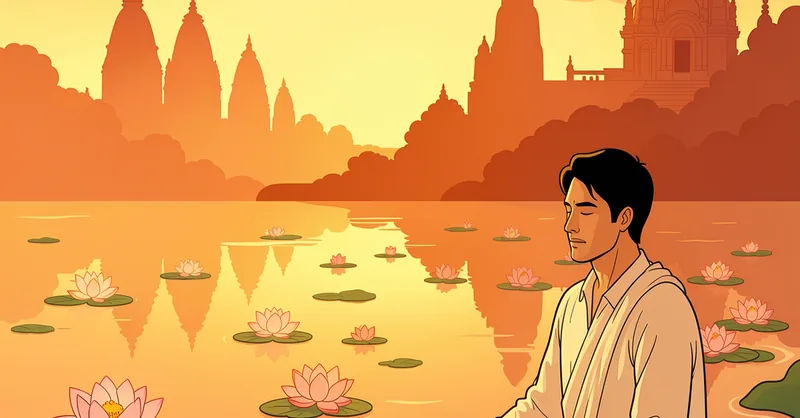
“The human life is not for eating, sleeping, and defending. The animals do that. The human life is for asking the question the animals cannot ask: What is God? What am I? What is my relationship with God? This inquiry is the business of human life.” — A.C. Bhaktivedanta Swami Prabhupāda
How Most Human Lives Are Wasted — and Why
Why do most human lives pass without engaging the supreme opportunity? Prabhupāda’s answer was simple: māyā is very expert at providing attractive distractions. The problem is not that people are evil or lazy. The problem is that the sense objects of the material world are genuinely attractive, and the soul in conditioned life has forgotten its true source of satisfaction. It is like a man with amnesia who has forgotten his home and is living contentedly in a ditch. He is not in pain enough to remember. The role of the spiritual teacher — the guru, the sādhu, the śāstra — is to remind the soul of what it has forgotten. This is why Prabhupāda spent every day of his life writing, speaking, and travelling — not because he had any personal ambition, but because he understood that every human soul who dies without this knowledge has missed the point of its birth.
yānti deva-vratā devān pitṟn yānti pitr-vratāḥ bhūtāni yānti bhūtejyā yānti mad-yājino ’pi mām
— Bhagavad-gītā 9.25
Translation: Those who worship the demigods will take birth among the demigods; those who worship the ancestors go to the ancestors; those who worship ghosts and spirits will take birth among such beings; and those who worship Me will live with Me.
Purport: Kṛṣṇa is establishing the principle of destination by devotion. You go where your consciousness is fixed at the time of death. This is why the entire practice of bhakti — chanting, hearing, remembering Kṛṣṇa — is designed to fix the consciousness on Kṛṣṇa. Not merely at the moment of death, but throughout every moment of life, so that death finds you already established in Kṛṣṇa consciousness. The human birth is the opportunity to build this consciousness. Nothing else is as urgent.
The Only Purpose That Honours the Human Birth
The practice is available. The knowledge is available. The teacher in the form of śāstra and the line of ācāryas is available. What remains is your decision. Prabhupāda did not teach a passive spirituality of waiting. He taught urgent, joyful, immediate engagement with Kṛṣṇa consciousness. Chant the mahā-mantra. Read the Bhagavad-gītā As It Is — not a commentator’s interpretation of it, but the direct word of Kṛṣṇa as Prabhupāda rendered it. Offer whatever you do — your work, your meals, your daily activities — to Kṛṣṇa. This is the principle of karma yoga elevated to bhakti: every action as service to the Supreme. Each such action purifies the consciousness. Each remembrance of Kṛṣṇa makes the next remembrance easier. Over time, the entire orientation of the life shifts from the material to the spiritual. This is the use of the human birth.
This body will not last. That is certain. The only uncertainty is when it will end. Prabhupāda used to say: don’t waste time. Not in the sense of anxious hurrying, but in the sense of clear priority. There is one thing this life can accomplish that no other form of life can: conscious, devoted return to Kṛṣṇa. Everything else — the career, the family, the achievements, the experiences — will be left behind at the moment of death. Only the quality of your consciousness, the depth of your bhakti, will accompany you. Invest accordingly. The human birth has been given. Use it.
Go deeper
Want the full playbook on this? Read Death Is Not the End: The Soul's Journey — a companion e-book from the library.