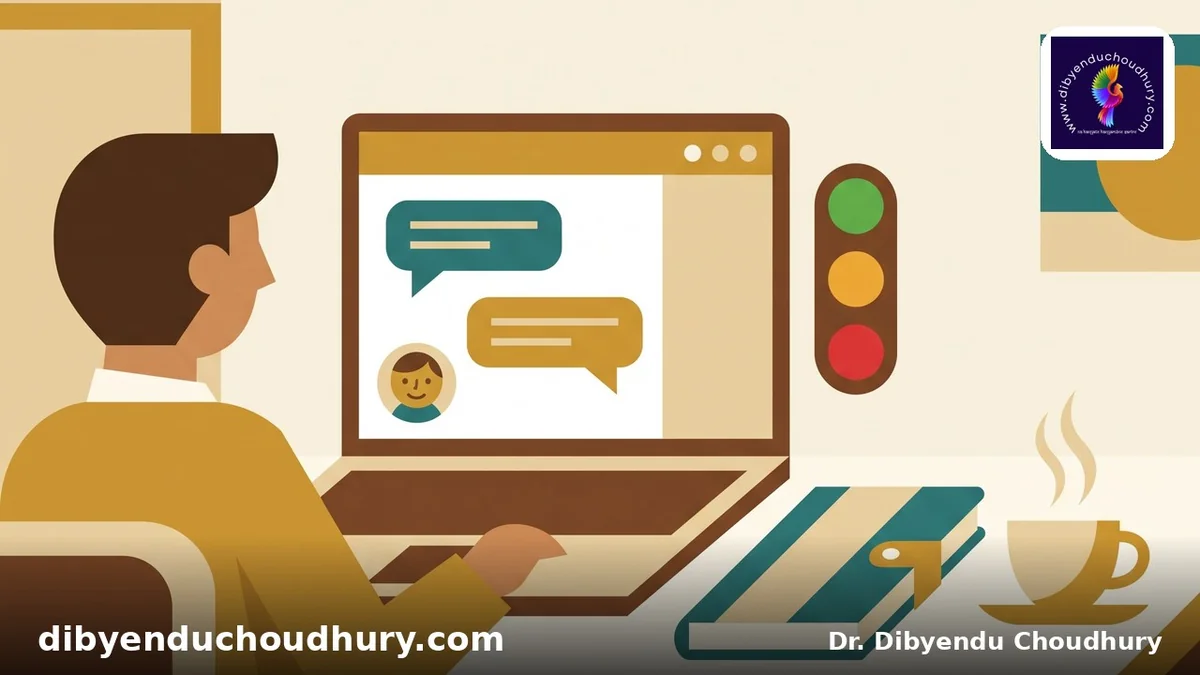
A shopkeeper I know had a simple arrangement with his AI assistant. Every evening he pasted the day's order messages into it and asked for a neat list: customer, item, quantity, delivery date. It worked for months. Then one week the lists began to arrive with the dates written differently, and two orders were merged into one because the customers shared a surname. Nothing had changed at his end. He had not touched the instruction. The tool had been updated, quietly, as these tools are, and the same question now produced a slightly different answer.
He found out the usual way, through a customer who did not receive her order. This article describes a habit that would have told him on the first morning instead: ten saved questions, with answers you already trust, which you run again after every update. It takes about twenty minutes, needs no technical skill, and it changes how a small business owner sits in front of an AI tool. You stop hoping it still works and start knowing.
Why the same question stops giving the same answer
We are used to software that behaves like a calculator. Press the same keys, get the same result, this year and next year. AI assistants are a different kind of thing. The company that makes the tool replaces the model behind it from time to time, adjusts how cautious it is, changes how long its answers run, or alters the way it reads a table. Most of these changes are improvements on average. But your business does not live on the average. It lives on four or five particular jobs that you have come to rely on, and an improvement on average can still be a step backwards for one of them.
There is a second reason. You change too. Somebody in the team edits the saved instruction to fix one problem and unknowingly breaks another. A new person starts using the tool with a different habit of asking. The price list that the tool was reading is replaced by a new format. In each case the tool is "the same", and the result is not.
None of this is a reason to distrust AI. It is a reason to check it the way a careful shop checks its weighing scale: not because the scale is dishonest, but because scales drift, and the cost of a drifting scale is paid by the customer first and the owner afterwards.
What a saved question looks like
A saved question has three parts, kept together on one page.
The first part is the exact input: the instruction you give, word for word, along with any material you paste in. If the job is turning order messages into a list, save five or six real messages from an ordinary day, with the names changed. If the job is drafting a reply to a late-payment query, save a real query.
The second part is the answer you trust. This is the output from a day when the tool did the job properly and a person checked it line by line. It does not need to be elegant. It needs to be correct, and you need to know that it is correct because someone looked.
The third part is one line saying what matters. For the order list it might be: every order on its own line, dates as day and month, quantities never guessed. For the payment reply: polite, mentions the invoice number, never promises a discount. This line is the heart of the page. Two answers can differ in wording and both be fine. The line tells you which differences you care about.

Choosing your ten
Ten is not a magic number. It is small enough to finish before your tea goes cold and large enough to cover the work that would hurt if it went wrong. I suggest choosing them in three groups.
Take five from the jobs you do every week. These are the daily bread: the order list, the quotation draft, the summary of a long supplier email, the translation of a notice into the local language, the first draft of a social media post. If the tool slips on any of these, you will feel it within days.
Take three from the places where a mistake costs money or trust. Anything with numbers belongs here: totals, tax lines, dates, quantities, units. So does anything that goes to a customer without a second reading. A question that asks the tool to add up a small bill, or to pull the due date from a purchase order, earns its place in the ten many times over.
Take two that test refusal. This sounds odd, so let me explain. A good assistant should decline to invent what it does not know. Save one question where the honest answer is "this is not in the document you gave me", and one where the material is plainly incomplete. If, after an update, the tool begins to fill those gaps with confident guesses, you want to know before it does the same thing with a real customer's order.
The twenty-minute routine
Keep the ten pages in one folder or one notebook, whichever your team will actually open. Then the routine is the same every time.
Run each saved question exactly as written. Do not improve the wording on the day; the whole point is that the input stays still so that any change you see belongs to the tool.
Put the new answer beside the trusted one and read them against the one line that says what matters. You are not marking an essay. You are asking a narrow question: is the thing I care about still true?
Mark each of the ten with one of three words. Same means the answer still does what matters. Different but fine means the wording or layout has changed and the substance has not. Broken means the thing you care about is no longer true. Write the date at the top of the sheet and keep it. After a few rounds these sheets become a small history of the tool, and that history is surprisingly useful when you are deciding whether to renew a subscription.
If something is broken, do not start rewriting everything. Change one thing in the instruction, run that single question again, and see. Often the fix is a sentence: "write dates as day and month", "keep each customer on a separate line even when names repeat". When the answer is right again, save the new instruction on the page and replace the trusted answer with the fresh one.
When to run it
After every update is the short answer, but updates are not always announced, so tie the checks to moments you can actually see. Run the ten when the tool tells you it has a new version or a new model. Run them when you change the saved instruction for any reason. Run them when you move to a different plan or a different tool altogether, because this is the fairest comparison you will ever get between two products: the same ten jobs, side by side. And run them on the first working day of each month even if nothing seems to have changed, because quiet changes are the ones that reach customers.
One person should own this, by name. In a small firm that is often the owner, but it can equally be the colleague who uses the tool most. What matters is that everyone knows whom to tell when an answer looks strange, and that the strange answer becomes a candidate for the next saved question.
What this habit changes
The first change is practical. Problems are found on a quiet morning by you, not on a busy afternoon by a customer.
The second is about judgment. Writing down the answer you trust forces you to decide what a good answer is, which most of us never do. We accept what looks reasonable. Ten pages of "this is what correct looks like in my business" is a better description of your standards than any policy document, and a new employee can learn from it in an hour.
The third is about dependence. A business that cannot say whether its tool still works is at the mercy of that tool. A business with ten saved questions can change tools, change plans or change instructions and know within twenty minutes where it stands. There is an old idea in our tradition that knowledge must be tested before it is relied upon, the way a goldsmith tests gold on the touchstone before he pays for it. The ten questions are your touchstone. They cost almost nothing, and they let you use these tools with confidence instead of hope.
One question to take away
If your AI tool changed tonight, which single job would you notice last, and what would it cost by the time you did? That job is your first saved question. Tell me in the comments which one you chose; I read every reply.
If you would like practical notes like this in your inbox, you can join the free newsletter.
📬 Join 49,000+ Indian Professionals
The Inner Circle newsletter delivers curated MSME intelligence, leadership wisdom, and strategic insights every week — completely free. Plus receive the 20 Gita Lessons PDF as a welcome gift.
Subscribe Free →Ready to Go Further?
Is your MSME AI-ready? I help Indian businesses understand and deploy practical AI workflows — from automation to decision intelligence. Book a focused strategy session.
Book a Digital Strategy CallPublished 23 November 2026 · dibyenduchoudhury.com